

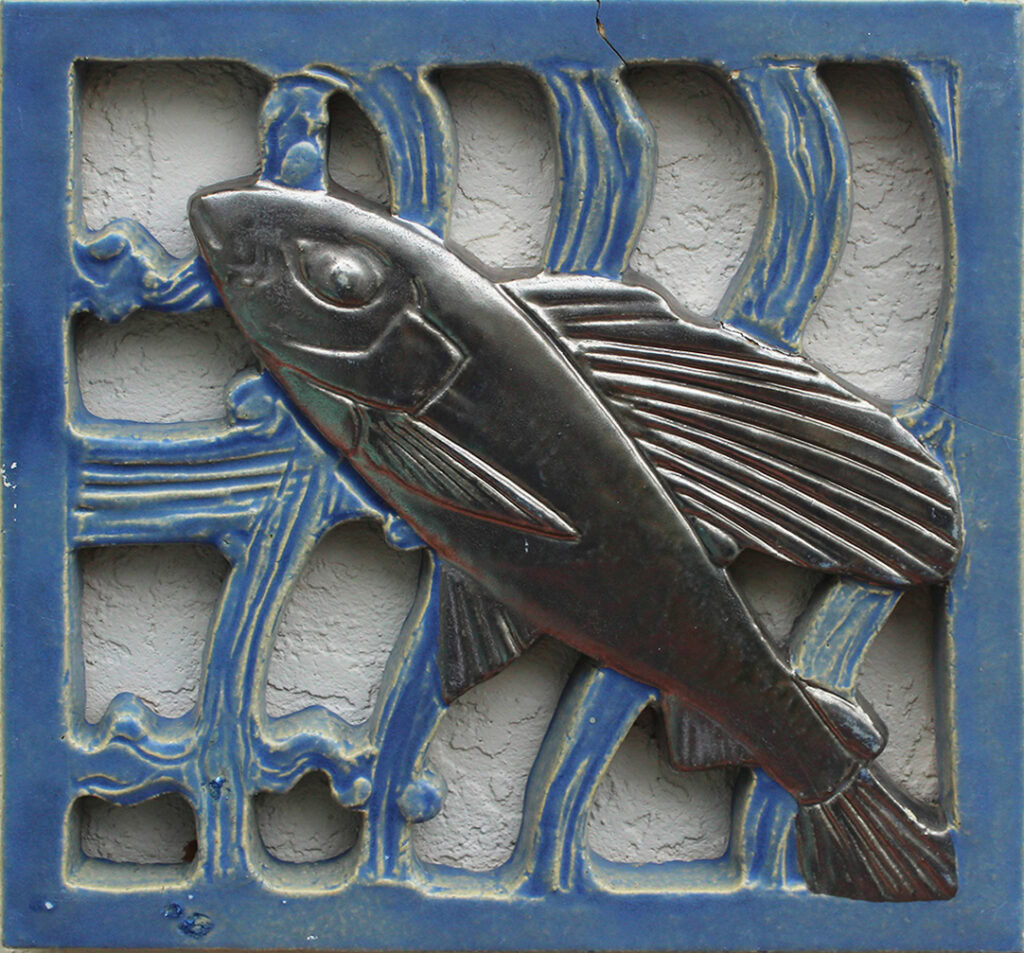
After writing about my grandfather, Joseph A D’Eath (see “E-News” Summer 2022 “Joseph Arthur D’Eath: A Man with a Mission”), I, Joe Pokorney, began reminiscing about my own interest in tile which is a direct result of his influence. My parents built two houses, one around 1945 in Morton Grove, Illinois and later in 1953 in Mequon, Wisconsin. Since my grandfather had a highly successful tile business in Chicago, he insisted on helping out his only daughter with both new houses. It was never clear if Mom really wanted all his help. These were the homes in which I grew up with their 5-foot-high kitchen tile walls, tile counter tops, and floors, all installed expertly with American Olean Tile. The downside was that any dropped glass or plate was instantly shattered into hundreds of shards.
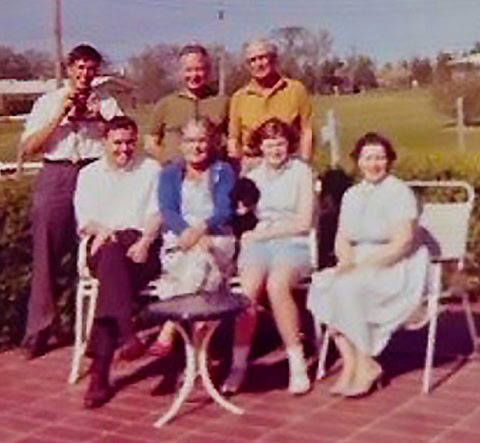
In 1953, we built the house in Mequon during my second year of high school. My grandfather decided since the house was on a graded lot that was about five feet lower in the back, we should add a patio. The “we” consisted of his design and my manual labor. The design was piano-shaped, about thirty feet along the back to be laid with red quarry tile in a side-by-side pattern with an edging of keystone cut tile around the outside.
The first task involved digging out and laying the cement block footers for the whole patio, then filling it in and pouring a cement slab to lay the tile on. Since my grandfather was in the tile business, he provided all the quarry tiles and a brand-new diamond blade tile saw. I cut both sides of the 6 by 12-inch red quarry tile with the saw to get the proper sized keystone pieces to fit.
Following my introduction to setting quarry tile, in 1957 my grandfather secured me a summer job working as a tile setter helper. The job was at a new ten-story hospital in Milwaukee where we installed the floor to ceiling lime green 4×4 tile in the basement morgue and in the 10th floor operating rooms. Additionally, every patient room had white base tile around the perimeter.
Two events of the summer job stand out in my memory. One Monday, ready to work on the 10th floor, the crane operators went on strike. All the tile, sand and tools were on the 10th floor, but no cement. The boss decided we would each carry a bag of cement, walk up the ten flights of stairs and continue setting tile.
After finishing the base tile in a patient room, there was one piece still to be cut. All of us were standing around estimating the size of the cut. Inexperienced but good at math and competitive, I blurted out “3 and 7/8”, and my guess turned out to be the exact size needed. The older tile setters just could not believe the smart-ass college kid had correctly estimated the cut. It was mostly luck!
As my grandfather became more successful, he and my grandmother traveled a bit, mostly by booking berths on freighters to Europe. While traveling especially in Spain or Italy, he would acquire tile treasures and ship them home. These might be fountain bowls, tile inserts, or unusual trim pieces. All of these would wind up at his tile shop in downtown Chicago. When he died in 1965, many of these pieces along with some samples from his sales office wound up in my home in Northbrook, a suburb of Chicago. Thus began the long saga of dragging almost half a ton of tile along on my own travels, first to temporary storage at my sister’s house north of Chicago, then to Washington, D.C. and finally, in 1999, to our home in Venice, Florida.
The collection included:
- Glazed fountain bowls
- Unusual feature strips
- Interesting tile inserts
- Numerous display panels set on Masonite boards
- Grill pieces 4×4 and some as large as 18” square
- Boxes of 1×1 mosaic tiles in all colors
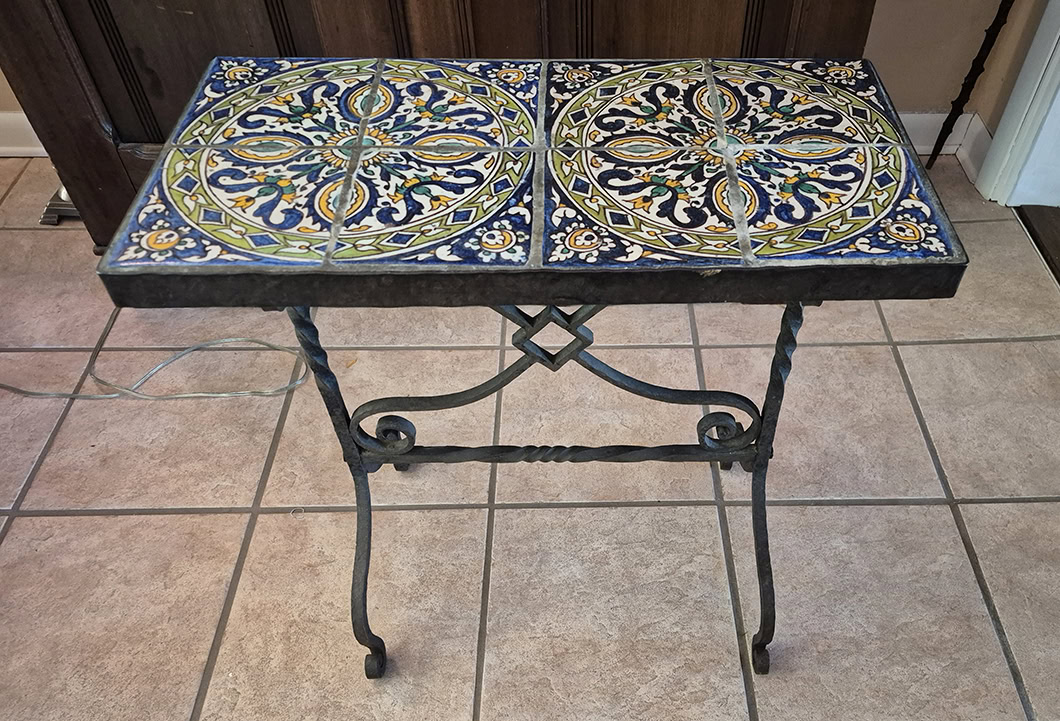
- A tile side table on a wrought iron frame
- Handmade tile xylophone
- Two hand-painted sailing ships on tile
Some of the collection, especially the feature strips, were still in their original wooden shipping crates, packed with sawdust from the days before heavy duty cardboard was produced. Up until a few years ago, when I discovered the Tile Heritage Foundation, I had not paid much attention to the historical significance of the tiles. One of my tiles is stamped Franklin Pottery Faience on the back. Based on Google and eBay research, there seems to be a lot of interest in these historical tiles. It was very surprising to learn how much of my collection is from Franklin in Lansdale, Pennsylvania.
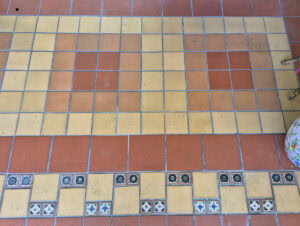
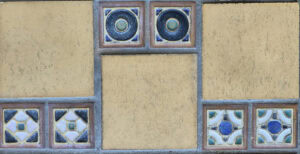
The first actual use of this collection was at our Florida home where the red and buff quarry tile along with a collection of inserts finished the 6×20 foot front porch.
Our Florida home had been built in 1955, which turned out to be one year after we built the house in Mequon, so the tile in our bathroom, now seventy-five years old, is very similar to what was installed in our old home. We retained the original bath and its 1955 American Olean green walls much to my wife Judith’s chagrin, as she was unable to appreciate the color. So far, I have successfully fought off her desire to paint the tile white.
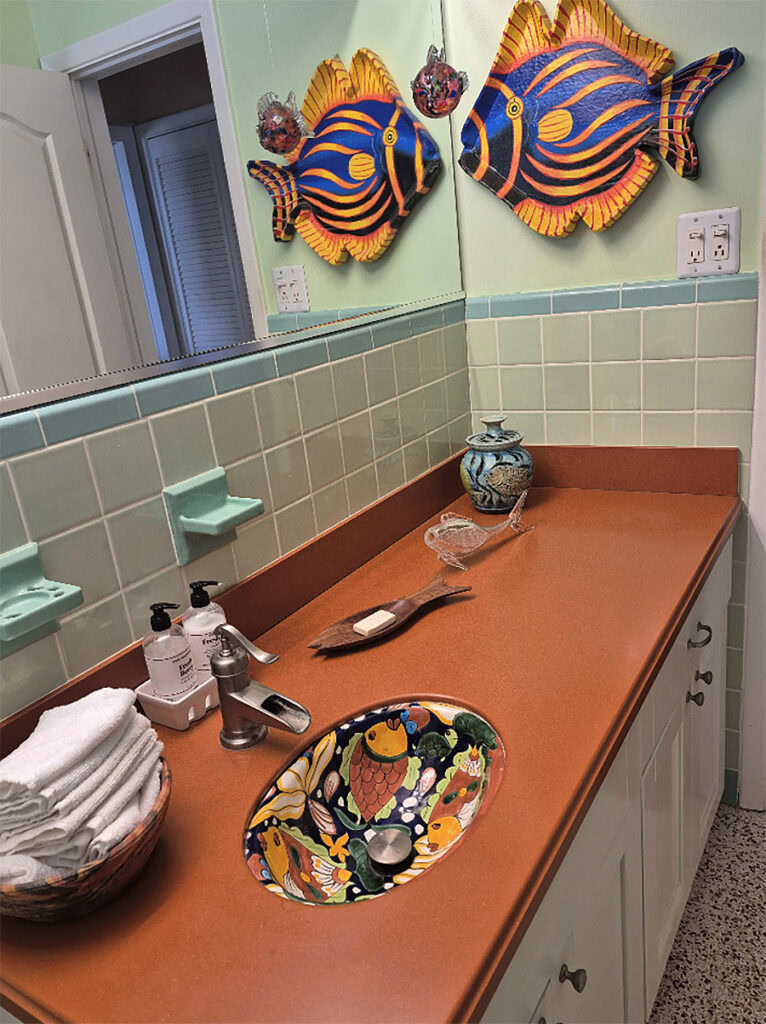
The original bath is the standard American Olean pale green 4×4 with dark green trim. We added a hand-painted ceramic sink purchased in Cancun, and a new cabinet, but other than the counter, the tile remains.
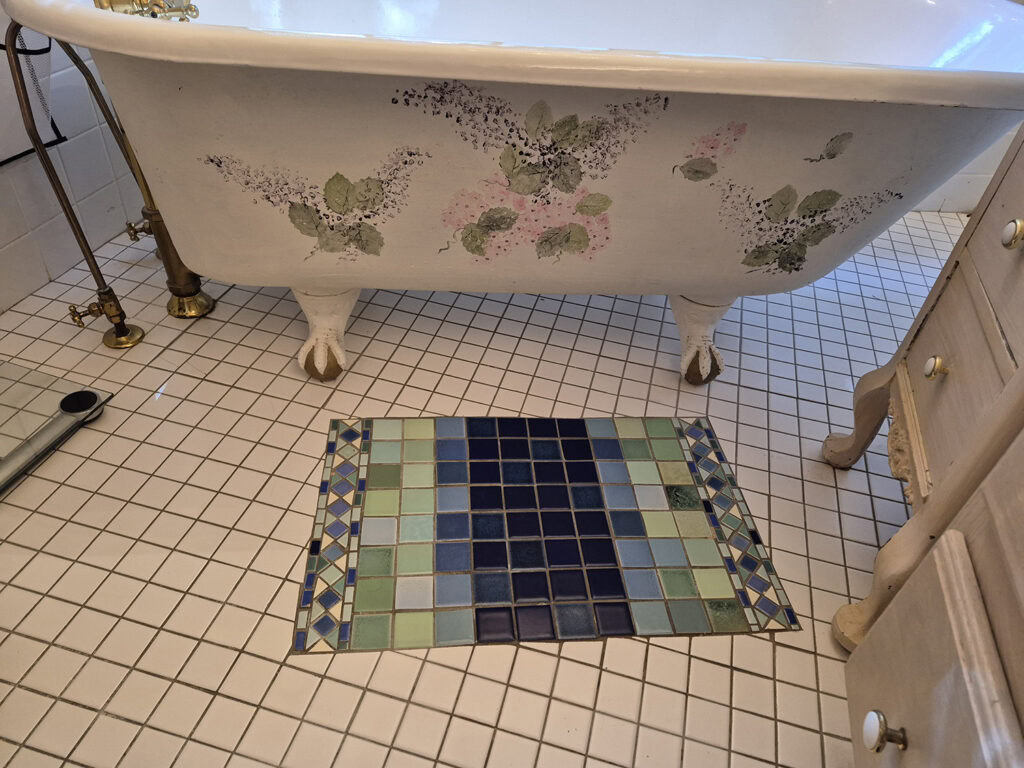
In 1998, we embarked on a major home renovation that included considerable aesthetic improvements to the front of the home and a whole new lanai, master bedroom and bath suite, with a small pool and deck. As work progressed on the remodel, various pieces of the tile collection could be used. Judith had purchased a large, old, cast-iron tub that we brought with us to Florida. After installing it in our new bathroom, I created a tile bathmat from the boxes and boxes of mosaics.
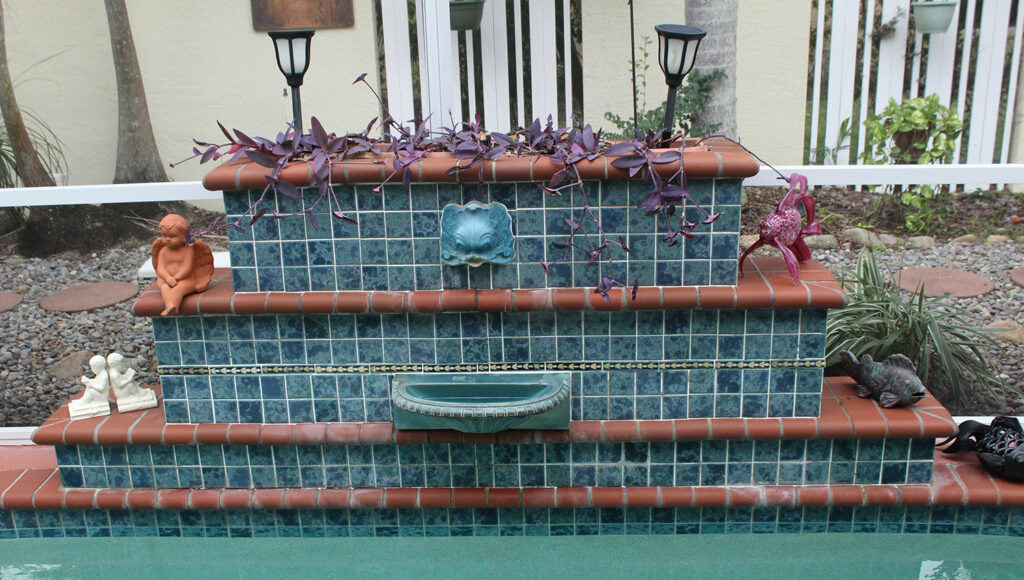
A small pool and fountain were installed. A simple cast concrete gargoyle was added to the wall incorporating some old feature strips along with one of the fountain bowls to finish it off.
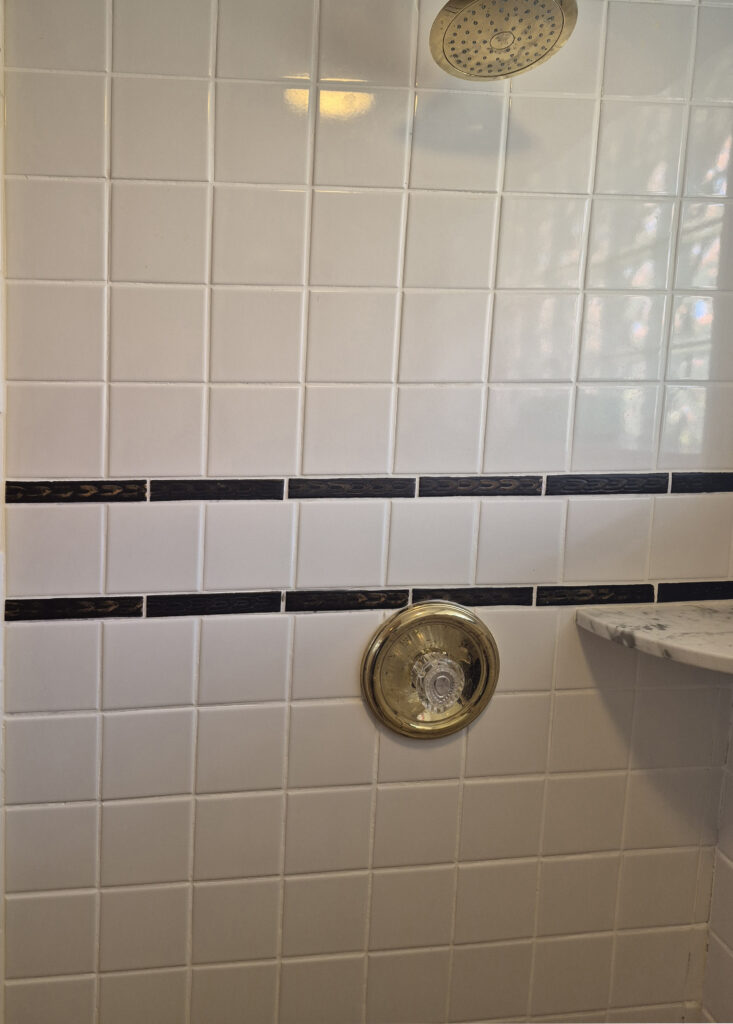
Some other interesting feature strips were incorporated into our master bath. One is a gold weave pattern on black in the shower and the other an interesting red rose pattern for the backsplash on the wall over the sink.
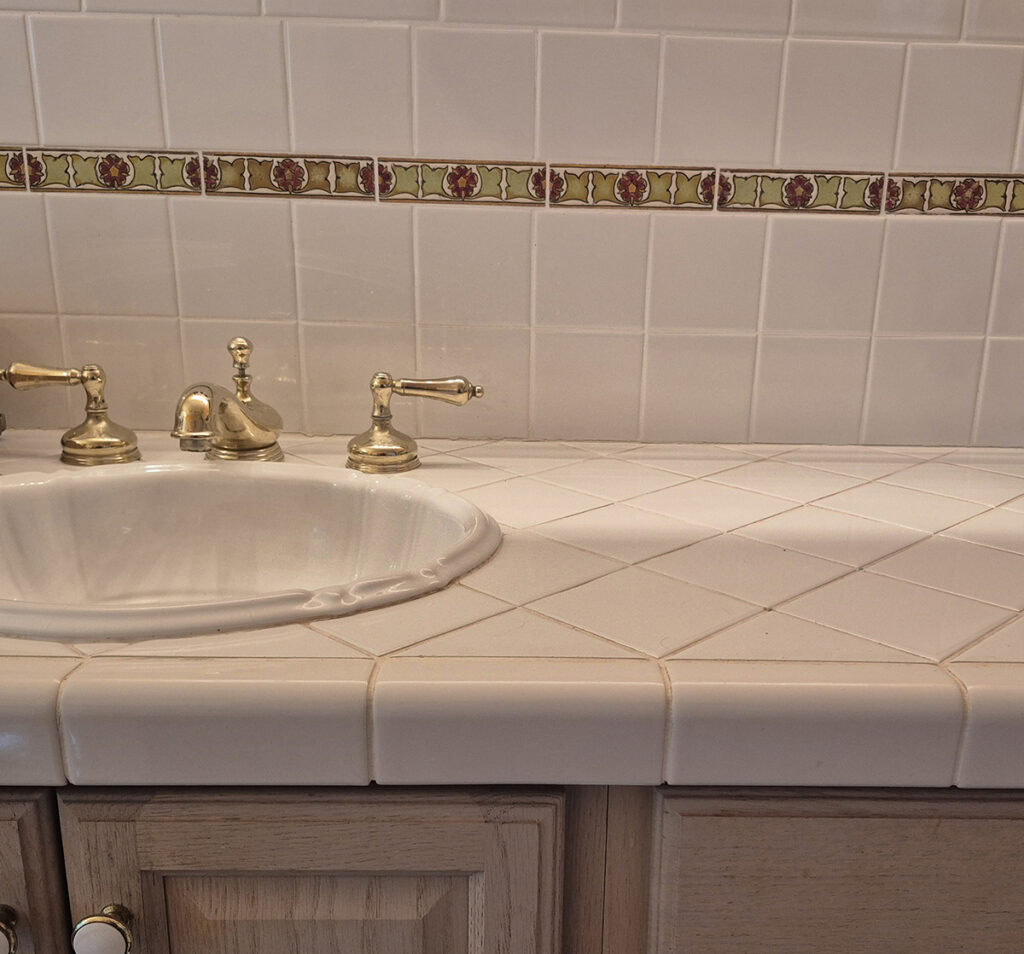

The outside of the house was finished with all new stucco, windows, and trim. A number of places on the walls of the pool deck, in the kitchen backsplash, and in the new master bathroom we were able to use some of the various individual tile pieces and grills that were part of the collection.
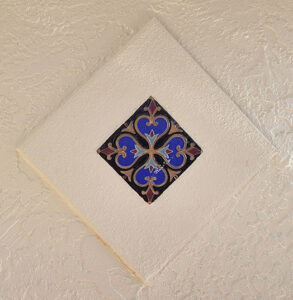
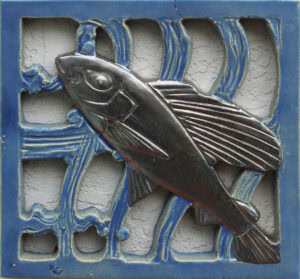
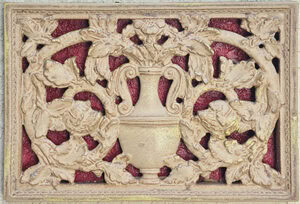

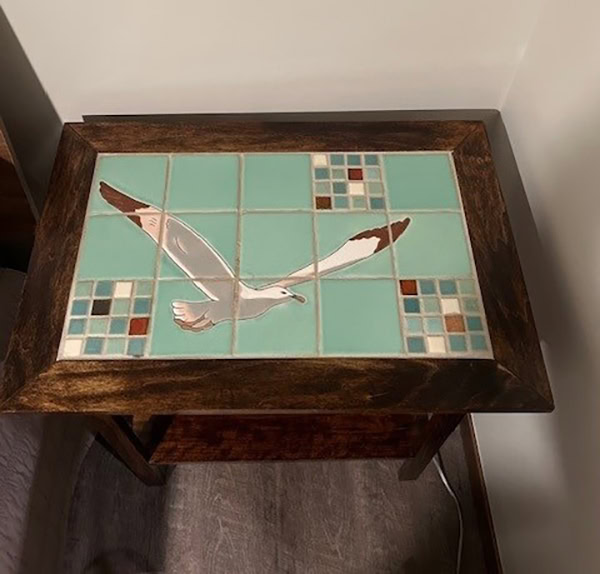
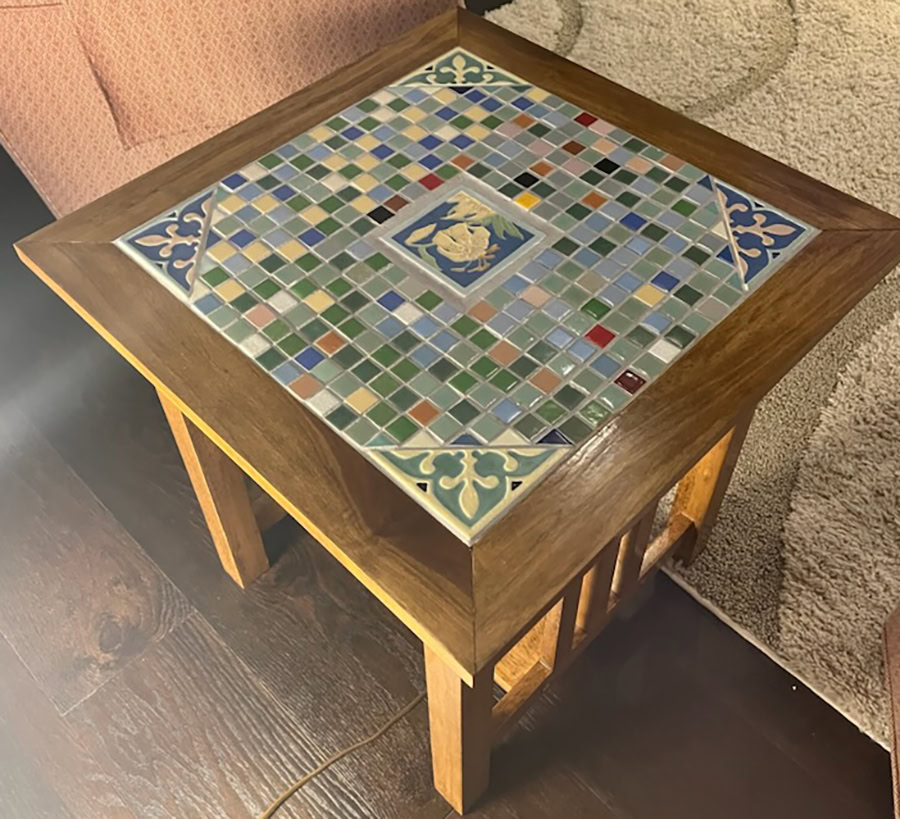
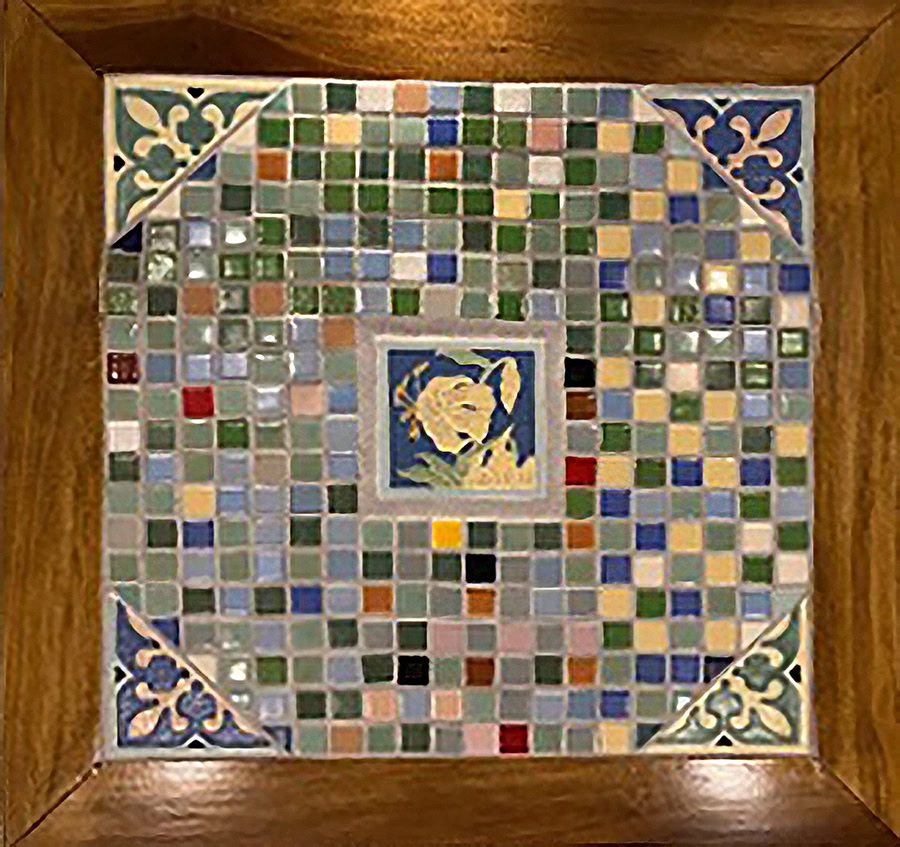
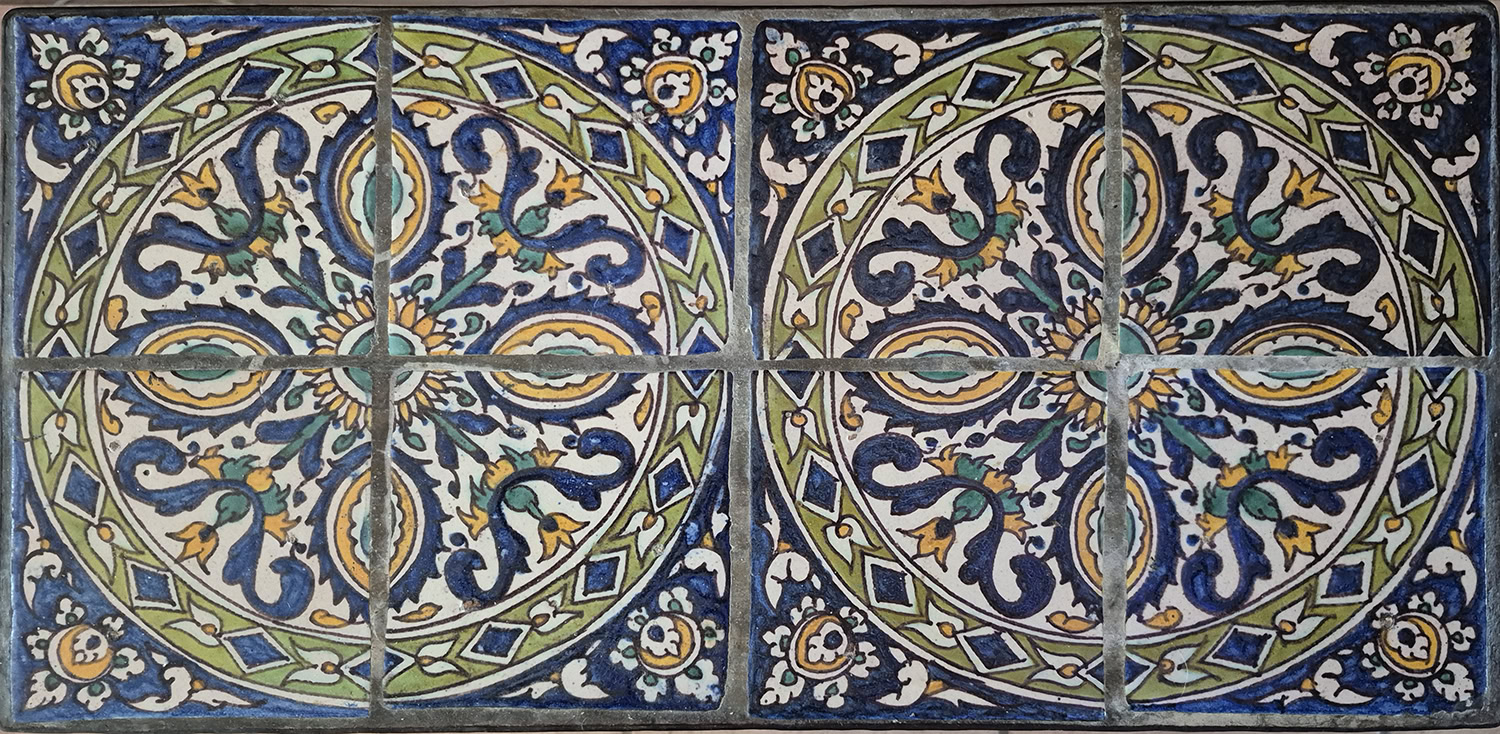
Finding uses for the old tile, I made a few tile tables for family members, combining my tile interest with woodworking while preserving some tile for the next generation. One table was originally a display set mounted on Masonite, but over the many years of storage and moving, three pieces had been damaged. Replacing them with some mosaic pieces seemed to be compatible with its existing hand-painted bird.
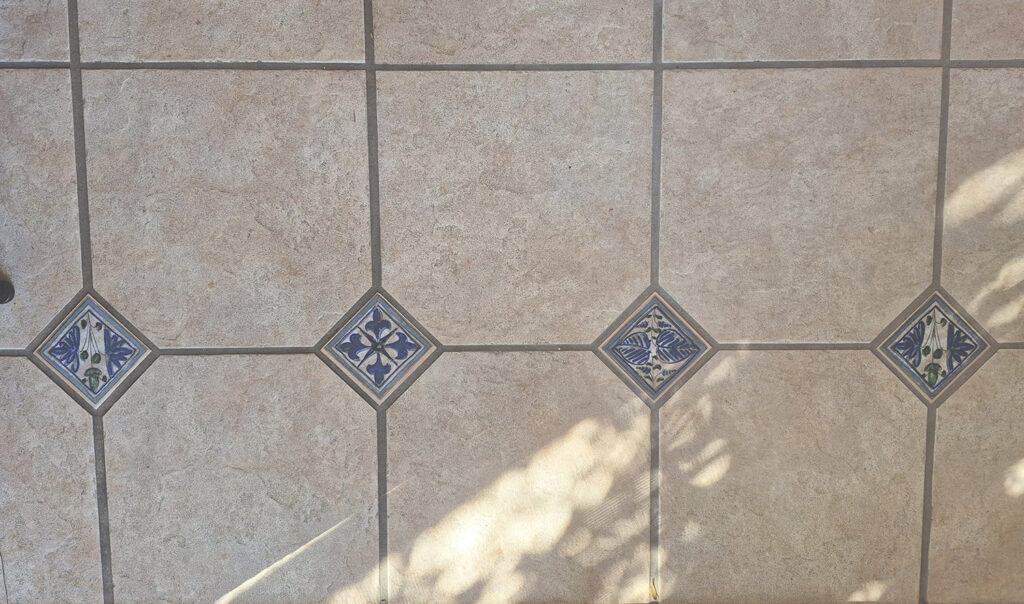
The original home had a beautiful terrazzo floor that had been hidden under a brown rug for years. We decided that the new addition needed tile flooring. In a moment of middle-aged energy (or foolishness) I made the decision to install all of the new floor tile myself. My knees have never been the same. I also wanted the work to be a bit special, so I cut 4×4 inserts along each of the doorways.
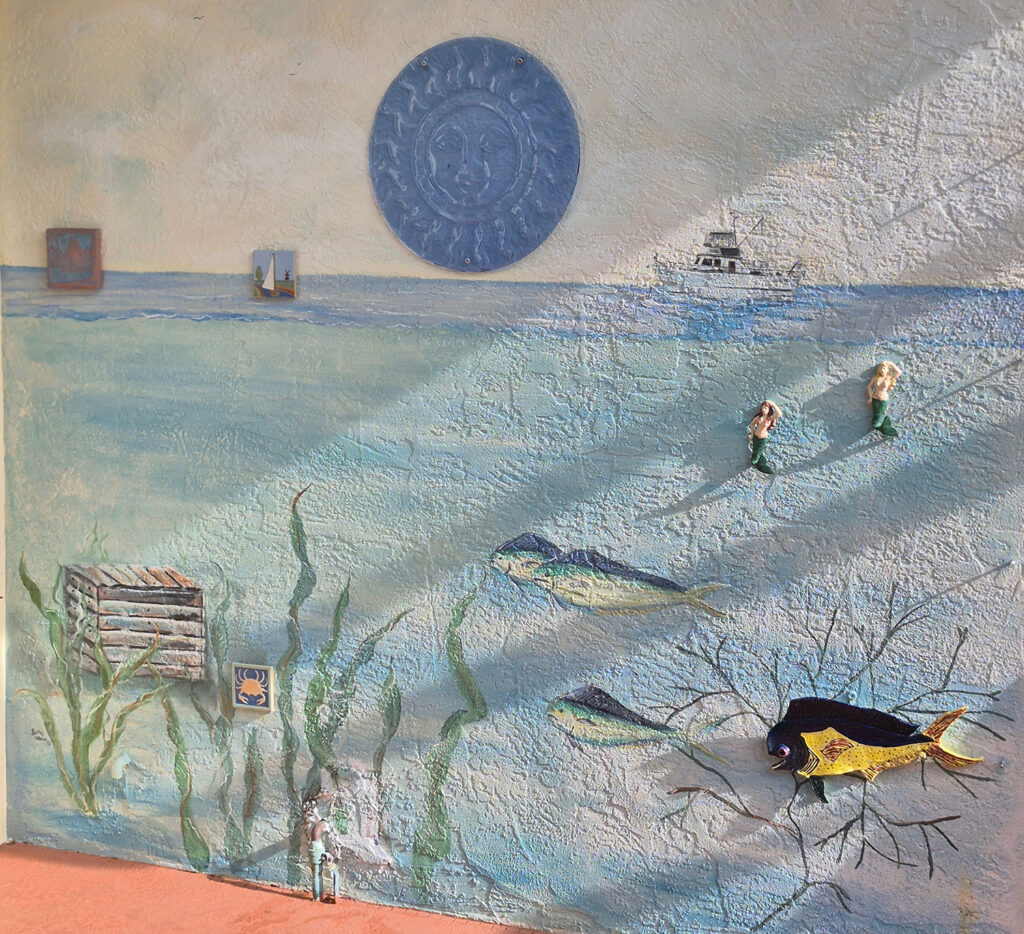
Sometime after we finished the remodeling, Judith connected with a local artist and commissioned her to paint a colorful mural on one wall facing the pool. It has a nautical south Florida theme with our trawler and various underwater plants, crab traps, etc. After it was completed, we experienced a whimsical moment and added a few tile inserts of sail boats and a crab.
Having been educated as an engineer and working with so much tile has evolved into a lifetime of critical observations of ceramic tile. In all my travels, whenever I see ceramic tile in a hotel, airport, a neighbor’s home, or a historical site, I notice every “miscut” piece, any misaligned tile, or a discrepancy in grouting. As you can see this has truly become an obsession for over seventy years.
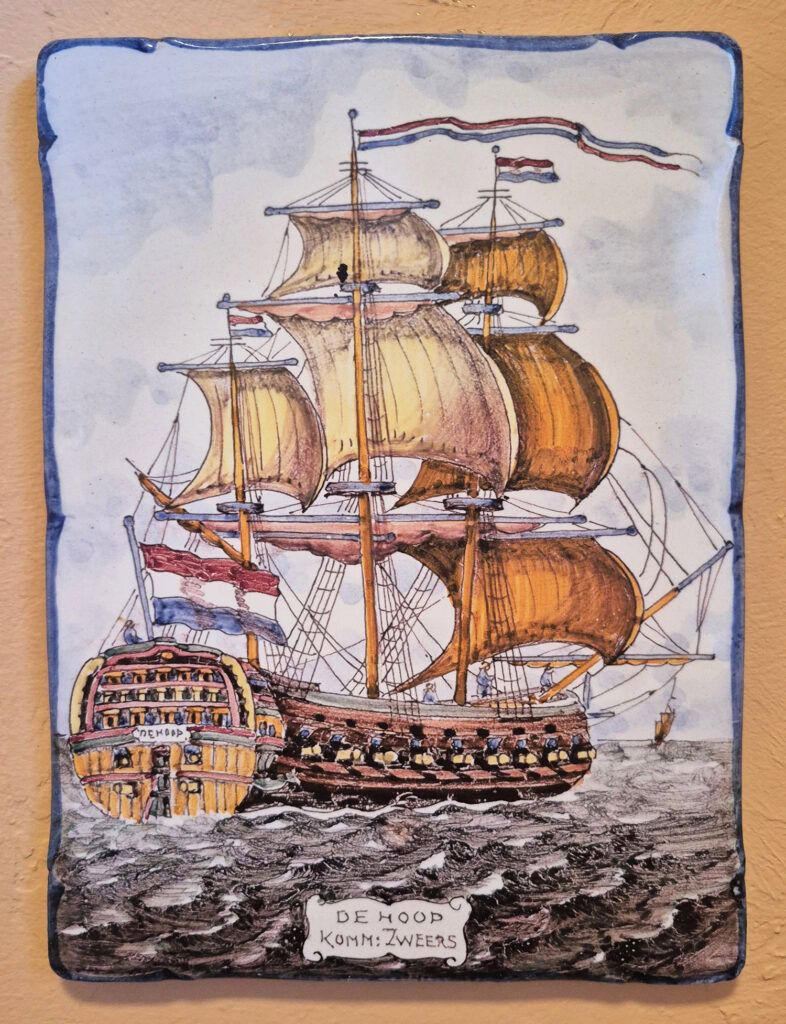
The Hope, a Dutch battleship under Commander Zweers for the Dutch East India Company.
“de Hoop” was a common name for historical Dutch merchant and naval vessels.