
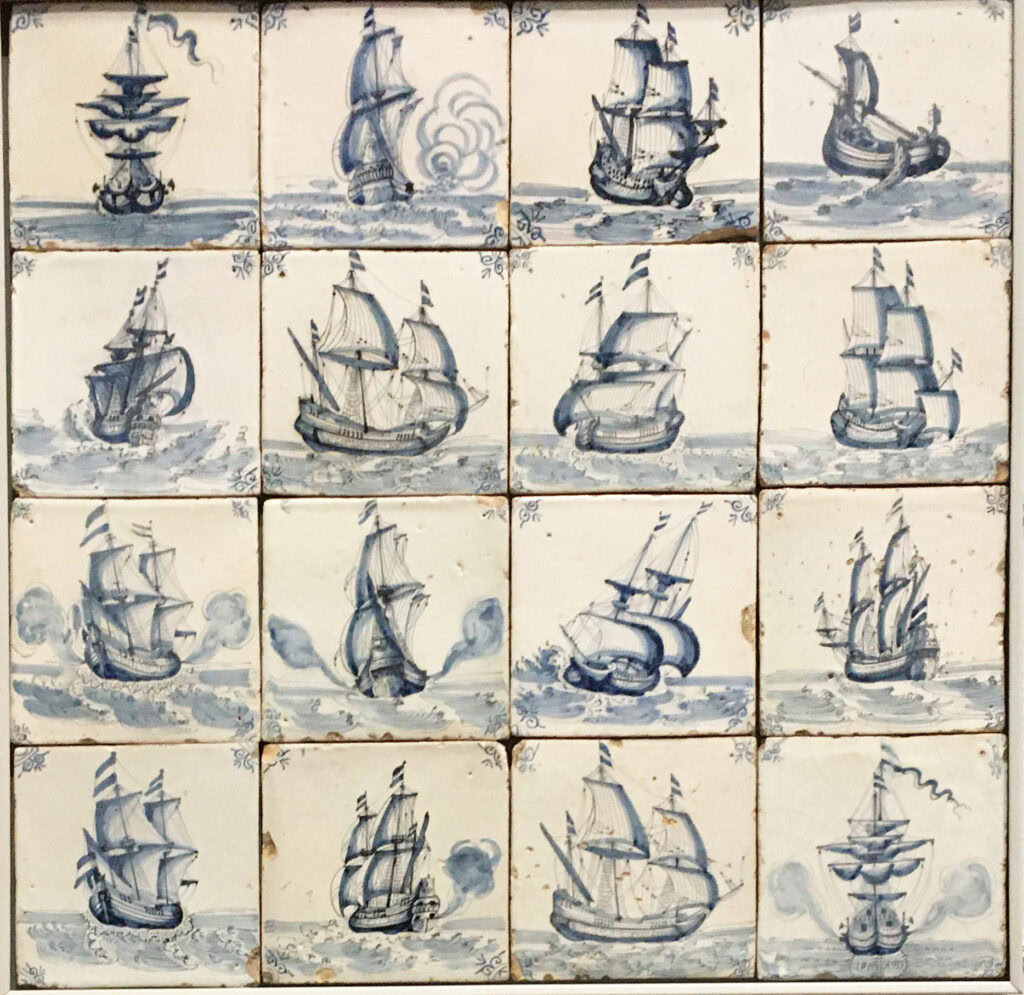
Men-of-War, Frigates, Flutes, and Herring Buss
1650-1700. Harlingen Gift of Mrs. Francis P. Garvan; gift of Antony N. B. Garvan From the top row: man-of-war on a calm sea; man-of-war shooting a cannon from starboard; three-masted frigate displaying her starboard bow; herring buss. Second row: three-masted flute with furled topsails; three-masted frigate; merchant man running before the wind; three-masted frigate. Third row: flute shooting cannons from both sides; ship shooting; flute heeling in a high wind with furled topsails; three-masted flute. Bottom row: three-masted flute; three-masted vessel shooting stern cannon; three-masted frigate; man-of-war shooting
“Dutch naval power rose rapidly in the late 1500s and the Netherlands dominated global commerce during the 1600s. Artists throughout the provinces depicted seagoing ships as well as smaller inland vessels.”

Pinks
1650-1700. Harlingen? Gift of Mrs. Francis P. Garvan A group of four pinks, used for fishing or as small coasters carrying goods and passengers on inland rivers and lakes. [cat. # 179, p. 144]